Skip to Content
COVID-19 Response and Update

Cancer

Cancer is one of the most significant and growing health challenges worldwide, affecting nearly 20 million new people each year

More than 18 million people in the U.S. are living with a history of cancer, including those in treatment and long-term survivors. Worldwide, cancer is one of the leading causes of death, responsible for nearly 10 million deaths annually. For patients and caregivers, the journey through cancer care is often complex and challenging —and for many, the burden extends far beyond diagnosis. High drug costs, complex insurance requirements, and the practical demands of treatment can create intense financial strain and limit access to modern therapies, placing significant pressure on patients and families. Amneal is committed to expanding access to affordable, high-quality cancer treatment options to help ease this burden and improve the overall experience of care.

Cancer is among the most expensive conditions to treat in the U.S. Nearly half of cancer patients and survivors face substantial medical debt, and an estimated 42% deplete their life savings within two years of diagnosis. Financial strain in cancer care has become so widespread that the term “financial toxicity” was coined specifically to communicate the distress and hardship caused by medical costs. Financial toxicity has been associated with poorer quality of life, heightened symptoms and pain, higher rates of depression, and worse overall outcomes, including increased mortality. Cost pressures can force patients to skip doses to extend their medication supply, delay care, or avoid treatment centers altogether. When someone is confronting cancer, financial worry should never stand between them and the care they need.

New cases of cancer diagnosed in the United States each year

1,800,000

Source: Centers for Disease Control and Prevention

Increase in likelihood to file for bankruptcy in Cancer patients

Projected growth in number of Cancer patients over the next fifteen years

Source: World Health Organization

In addition to cost as a main determinant of access to oncology treatment, there is a discrepancy in quality care among the general population that increases access challenges. Racial and ethnic minority groups and medically underserved communities experience more treatment delays, higher rates of undertreatment, and greater financial and treatment-related toxicities. These challenges are often driven by income, insurance barriers, and limited proximity to cancer centers. For example, higher mortality rates among Black breast cancer survivors are strongly associated with disparities in timely, high-quality care and access to treatment (American Cancer Society, 2019a; Cho et al., 2021; Green et al., 2018; Penner et al., 2012). 
Accessibility trends

While vast resources are poured into Cancer awareness and research, access to treatment can remain daunting

Affordability

Failing
While overall cancer spend and out-of-pocket costs are rising, biosimilars, generic orals, and assistance programs are easing costs in specific regimens and for some insured patients.
Estimated Cancer-related costs to patients
$21B
Proportion of Cancer patients who reported that the cost of their Cancer care affected their ability to pay for basic necessities like food and shelter
40%

Availability

Improving
Oncology availability is improving as care delivery becomes more decentralized and flexible. Expanded use of community oncology centers, oral and at-home therapies, and telemedicine have increased patients’ ability to reach treatment. However, access still varies by region, cancer type, and insurance status, particularly for rural and underserved populations. 
Proportion of Cancer patients who use telehealth resources
15%
Oncologists who practice in rural areas
3%

Source: McKesson

Proportion of Cancer patients who receive care in community settings
85%

Innovation

Accelerating
Innovation in oncology is accelerating at a rapid pace.  Advances in immunotherapy, targeted therapies, precision diagnostics, and data-driven care are transforming how cancers are detected, matched to treatment, and managed over time. Together, these innovations are enabling more personalized, effective, and precise care.
Average improvement in 5-year survival rate from 1960 - 2020
34.5%
Proportion of screening-detected breast cancers correctly identified by AI
+80%

Knowledge

Improving
The depth and quality of cancer science, clinical guidance, and patient education continues to expand. Growing evidence, clearer treatment pathways, and more widely available educational resources are helping clinicians apply complex advances more consistently and improving outcomes at the population level. 
Proportion of articles in PubMed related to Cancer
2005
11%
Today
16-18%

Source: OncoDaily

Amneal’s commitment to the Cancer community

Amneal is committed to expanding access to essential cancer therapies through affordable, innovative treatments

To help expand access to essential cancer therapies, Amneal is addressing two of the biggest barriers in oncology care: affordability and treatment complexity.

By developing high-quality generics, biosimilars, and ready-to-use generic injectable medicines, Amneal helps lower treatment costs, reduce preparation and administration burdens for providers, and enable broader availability across hospitals, clinics, and outpatient settings. Together, these solutions support more efficient care delivery while helping patients start and stay on treatment with fewer logistical and financial challenges.

5
FDA-approved biosimilars, reflecting Amneal’s expertise in complex biologic development and regulatory execution
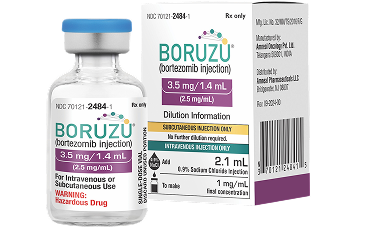
Boruzu™ a ready-to-use injectable cancer medicine that may be used to treat blood cancers like multiple myeloma or mantle cell lymphoma
Learn more
Boruzu
Sean McGowan
“Our ready-to-use injectable presentations are important innovations in oncology, as they reduce the pharmacy preparation steps for clinicians while expanding access to patients.”
Sean McGowan
Senior Vice President, Biosimilars and Branded Oncology
Through the 505(b)(2) regulatory pathway, Amneal advances improved versions of existing oncology medicines by building on established clinical evidence. This approach allows us to deliver ready-to-use injectable formulations that reduce complexity at the point of care, improve safety, and ease the operational burden on oncology teams. By streamlining preparation and minimizing waste, these formulations help support more efficient, reliable cancer care across treatment settings
Overall U.S. savings generated by generics and biosimilars in 2021:
$373B
Biosimilars have allowed for more than
150M days
of patient therapy that would not have occurred without biosimilar competition

The information presented in this Accessibility Index is compiled from publicly available sources believed to be reliable at the time of publication. However, Amneal makes no representations or warranties, express or implied, regarding the accuracy, completeness, or timeliness of the data provided. The content is for informational purposes only and does not constitute professional advice or endorsement.

The views and opinions expressed in this index do not necessarily reflect those of Amneal, its affiliates, or its employees. Amneal disclaims any liability for any decisions made or actions taken based on the information contained herein.

This index is intended to support awareness and understanding of medicine accessibility and is not a substitute for professional consultation or regulatory guidance. Users are encouraged to verify information independently and consult appropriate experts before making decisions.

By using this site, you acknowledge and agree to these terms.

BORUZU is a proteasome inhibitor indicated for:

  • Treatment of adult patients with multiple myeloma
  • Treatment of adult patients with mantle cell lymphoma
DOSAGE AND ADMINISTRATION

BORUZU is for subcutaneous or intravenous use only. Because each route of administration has a different final concentration, caution should be used when calculating the volume to be administered.

CONTRAINDICATIONS
  • BORUZU is contraindicated in patients with hypersensitivity (not including local reactions) to bortezomib, boron, or mannitol. Reactions have included anaphylactic reactions.
  • BORUZU is contraindicated for intrathecal administration. Fatal events have occurred with intrathecal administration of BORUZU
WARNINGS AND PRECAUTIONS
  • Peripheral Neuropathy: Bortezomib treatment causes a peripheral neuropathy that is predominantly sensory; however, cases of severe sensory and motor peripheral neuropathy have been reported. Patients with pre-existing symptoms (numbness, pain or a burning feeling in the feet or hands) and/or signs of peripheral neuropathy may experience worsening peripheral neuropathy (including ≥ Grade 3) during treatment with bortezomib. Patients should be monitored for symptoms of neuropathy, such as a burning sensation, hyperesthesia, hypoesthesia, paresthesia, discomfort, neuropathic pain or weakness. Starting bortezomib subcutaneously may be considered for patients with pre-existing or at high risk of peripheral neuropathy.

    Patients experiencing new or worsening peripheral neuropathy during bortezomib therapy may require a decrease in the dose and/or a less dose-intense schedule. The long-term outcome of peripheral neuropathy has not been studied in mantle cell lymphoma.
  • Hypotension: Treatment with BORUZU may cause hypotension. Patients with a history of syncope, patients receiving medications known to be associated with hypotension, and patients who are dehydrated may be at increased risk of hypotension. Management of orthostatic/postural hypotension may include adjustment of antihypertensive medications, hydration, and administration of mineralocorticoids and/or sympathomimetics.
  • Cardiac Toxicity: Acute development or exacerbation of congestive heart failure and new onset of decreased left ventricular ejection fraction have occurred during bortezomib therapy, including reports in patients with no risk factors. Patients with risk factors for, or existing heart disease should be frequently monitored. There have also been isolated cases of QT-interval prolongation in clinical studies, although causality has not been established.
  • Pulmonary Toxicity: Acute Respiratory Distress Syndrome (ARDS) and acute diffuse infiltrative pulmonary disease of unknown etiology such as pneumonitis, interstitial pneumonia, and lung infiltration have occurred in patients receiving BORUZU. Some of these events have been fatal. In the event of new or worsening cardiopulmonary symptoms, consider interrupting bortezomib until a prompt and comprehensive diagnostic evaluation is conducted.
  • Posterior Reversible Encephalopathy Syndrome (PRES): PRES has occurred in patients receiving BORUZU which can present with seizure, hypertension, headache, lethargy, confusion, blindness, and other visual and neurological disturbances. Brain imaging, preferably MRI (Magnetic Resonance Imaging), is used to confirm the diagnosis. In patients developing PRES, discontinue BORUZU. The safety of reinitiating BORUZU therapy in patients previously experiencing PRES is not known.
  • Gastrointestinal Toxicity: BORUZU treatment can cause nausea, diarrhea, constipation, and vomiting, which may require the use of antiemetic and antidiarrheal medications. Ileus has also been reported. Fluid and electrolyte replacement should be administered to prevent dehydration, and BORUZU should be interrupted for severe symptoms.
  • Thrombocytopenia/Neutropenia: Bortezomib is associated with thrombocytopenia and neutropenia that follow a cyclical pattern with nadirs occurring following the last dose of each cycle and typically recovering prior to initiation of the subsequent cycle. Monitor complete blood counts (CBC) frequently during treatment and assess platelet counts prior to each dose of BORUZU. If thrombocytopenia develops, adjust the dose/schedule as outlined in the full prescribing information. Gastrointestinal and intracerebral hemorrhage have been reported in association with thrombocytopenia during BORUZU treatment. Manage patients with transfusions and supportive care according to published guidelines.
  • Tumor Lysis Syndrome: Tumor lysis syndrome has been reported with BORUZU therapy. Patients at risk of tumor lysis syndrome are those with high tumor burden prior to treatment. Monitor patients closely and take appropriate precautions.
  • Hepatic Toxicity: Cases of acute liver failure have been reported in patients receiving multiple concomitant medications and in those with serious underlying medical conditions. Other reported hepatic reactions include hepatitis, increases in liver enzymes, and hyperbilirubinemia. Interrupt BORUZU therapy to assess reversibility. There is limited rechallenge information in these patients.
  • Thrombotic Microangiopathy: Cases, sometimes fatal, of thrombotic microangiopathy, including thrombotic thrombocytopenic purpura/hemolytic uremic syndrome (TTP/HUS), have been reported in the postmarketing setting in patients who received bortezomib. Monitor for signs and symptoms of TTP/HUS and if the diagnosis is suspected, stop bortezomib and evaluate. If the diagnosis of TTP/HUS is excluded, consider restarting bortezomib. The safety of reinitiating bortezomib therapy in patients previously experiencing TTP/HUS is not known.
  • Embryo-Fetal Toxicity: Bortezomib can cause fetal harm when administered to a pregnant woman. Advise females of reproductive potential to use effective contraception during treatment with BORUZU and for seven months following treatment. Advise males with female partners of reproductive potential to use effective contraception during treatment with BORUZU and for four months following treatment. If BORUZU is used during pregnancy or if the patient becomes pregnant during BORUZU treatment, the patient should be apprised of the potential risk to the fetus.
ADVERSE REACTIONS
  • The most common adverse reactions in adults (> 20%) for treatment of multiple myeloma include thrombocytopenia, neutropenia, anemia, leukopenia, lymphopenia, nausea, diarrhea, vomiting, constipation, peripheral neuropathy, neuralgia, anorexia, pyrexia, and fatigue.
  • The most common adverse reactions in adults (> 20%) for treatment of mantle cell lymphoma include neutropenia, leukopenia, anemia, thrombocytopenia, lymphopenia, peripheral neuropathy, pyrexia, nausea, and diarrhea.
  • These are not all the possible side effects of BORUZU. Please see the full Prescribing Information for additional safety information and talk to your doctor for medical advice about side effects.
DRUG INTERACTIONS
  • Strong CYP3A4 Inhibitors: Coadministration with a strong CYP3A4 inducer decreases the exposure of bortezomib which may decrease bortezomib efficacy. Avoid coadministration with strong CYP3A4 inducers.
  • Strong CYP3A4 Inducers: Coadministration with a strong CYP3A4 inhibitor increases the exposure of bortezomib which may increase the risk of bortezomib toxicities. Monitor patients for signs of bortezomib toxicity and consider a bortezomib dose reduction if bortezomib must be given in combination with strong CYP3A4 inhibitors.
USE IN SPECIFIC POPULATIONS
  • Pregnancy: Bortezomib can cause fetal harm when administered to a pregnant woman. There are no studies with the use of bortezomib in pregnant women to inform drug-associated risks. Advise pregnant women of the potential risk to the fetus.
  • Lactation: There are no data on the presence of bortezomib or its metabolites in human milk, the effects of the drug on the breastfed child, or the effects of the drug on milk production. Because many drugs are excreted in human milk and because the potential for serious adverse reactions in a breastfed child from bortezomib is unknown, advise nursing women not to breastfeed during treatment with bortezomib and for two months after treatment.
  • Females and Males of Reproductive Potential: Bortezomib can cause fetal harm when administered to a pregnant woman. Conduct pregnancy testing in females of reproductive potential prior to initiating bortezomib treatment. Females of reproductive potential should be advised to use effective contraception during treatment with bortezomib and for seven months after the last dose. Males with female partners of reproductive potential should be advised to use effective contraception during treatment with bortezomib and for four months after the last dose. Based on the mechanism of action and findings in animals, bortezomib may have an effect on either male or female fertility.
  • Pediatric Use: Safety and effectiveness of bortezomib have not been established in pediatric patients.
  • Geriatric Use: No overall differences in safety or effectiveness were observed between patients ≥ age 65 and younger patients receiving bortezomib; but greater sensitivity of some older individuals cannot be ruled out.
  • Renal Impairment: No starting dosage adjustment of bortezomib is recommended for patients with renal impairment. In patients requiring dialysis, bortezomib should be administered after the dialysis procedure.
  • Hepatic Impairment: No starting dosage adjustment of bortezomib is recommended for patients with mild hepatic impairment (total bilirubin ≤ 1 × ULN and AST > ULN, or total bilirubin > 1 to 1.5 × ULN and any AST). The exposure of bortezomib is increased in patients with moderate (total bilirubin ≥ 1.5 to 3 × ULN and any AST) and severe (total bilirubin > 3 × ULN and any AST) hepatic impairment. Reduce the starting dose in patients with moderate or severe hepatic impairment.
  • Patients With Diabetes: During clinical trials, hypoglycemia and hyperglycemia were reported in diabetic patients receiving oral hypoglycemics. Patients on oral antidiabetic agents receiving bortezomib treatment may require close monitoring of their blood glucose levels and adjustment of the dose of their antidiabetic medication.

To report SUSPECTED ADVERSE REACTIONS, contact Amneal Biosciences, a division of Amneal Pharmaceuticals LLC at 1-877-835-5472 or the FDA at 1-800-FDA-1088 or www.fda.gov/medwatch.

Please read the full Prescribing Information.

NON-PP-BOR-0009 05/2026