Skip to Content
COVID-19 Response and Update

Factors of medicine accessibility

Innovation

Human-centric innovation can give people access to lifestyles that hadn’t been possible before

People often think of breakthroughs in medicine happening in the lab, at the molecular level, often leading to patents for new name brand drugs. Though it comes at an expense, this level of R&D is incredibly valuable and has helped millions of people live better, longer lives. But there are also many ways innovation can define or redefine the standard of care beyond the molecule, from smarter formulations, new delivery and administration approaches, and dosing simplicity that make treatments easier to start, simpler to stay on, and more in tune with the realities of patients’ daily lives.

A major barrier to access lies not in the absence of treatment options, but in the complexity surrounding them. Approximately 50% of prescriptions are taken incorrectly, particularly with regard to timing, dosage, frequency, and duration. For many patients, managing a chronic condition requires navigating multi-step dosing, difficult administration, uncomfortable side effects, and frequent appointments. These friction points can undermine overall adherence to treatment plans and compromise outcomes.

Furthermore, many patients face health equity barriers that limit their access to essential medicines and necessary treatment. Innovations that allow for home administration and reduced reliance on in-clinic monitoring, or products designed for longer shelf life can make treatment significantly more accessible. When innovative home-administration options are given, 70% to 100% of patients report higher satisfaction and greater willingness to continue home-based treatment.
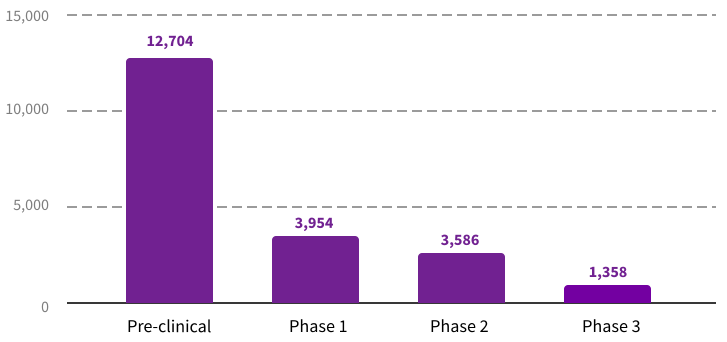
Number of drugs in the R&D pipeline worldwide in 2025, by development phase

Source: Statista

Total number of “Breakthrough therapies” approved by the U.S. FDA in all of 2024

18

Source: U.S. FDA

Proportion of patients who report higher satisfaction with home-based treatment

70-100%

Source: American Society of Hematology, Blood

Patients taking an innovative polypill treatment that lowers the number of doses required increase medication adherence 21.6% over standard treatment
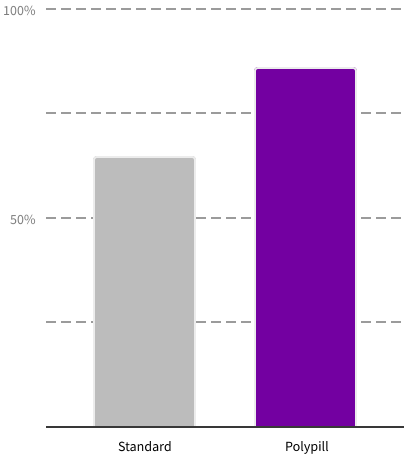
Source: National Library of Medicine

Innovation across the medicine ecosystem focused on real patient needs—from novel molecules to easier to use formats and simpler dosing can collectively help people gain access to outcomes and lifestyles not previously possible.

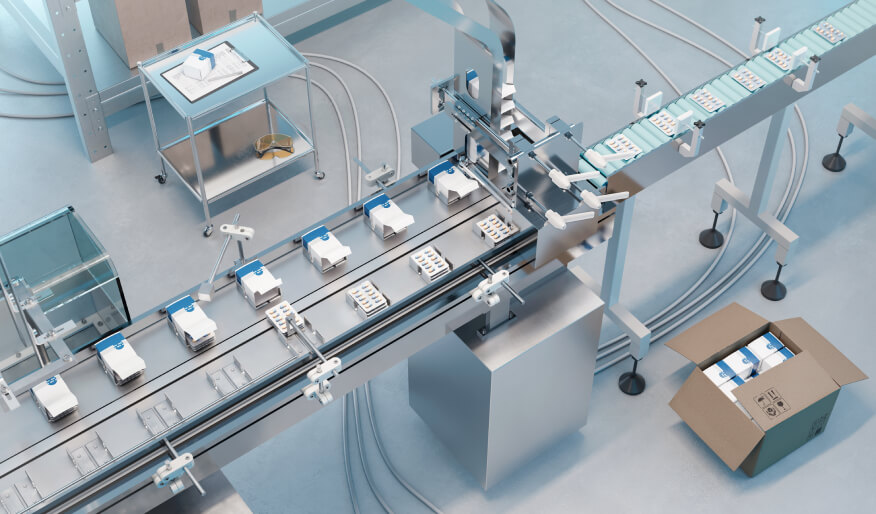
Key drivers of innovation

Innovations from molecular breakthroughs to delivery enhancements and process simplification

01

Novel therapeutics and molecule discovery

The discovery and development of novel medicines, including first-in-class or differentiated therapies, that address unmet needs by treating new diseases or existing diseases in fundamentally new ways

02

Drug format/administration enhancements

Innovations in how medicines are formulated, delivered, or administered that improve ease of use for patients, efficiency for providers, or preparation by pharmacists including approaches that reduce burden, enable new care settings, or improve adherence and outcomes

03

Advancements in care delivery models

New ways of organizing, partnering, and operating across manufacturers, governments, healthcare organizations, states, and other stakeholders to develop, distribute, or deliver medicines, expanding reach, accelerating access, or enabling care in settings not previously possible

Share your thoughts
Have you faced any of these barriers to innovation in the last five years?
Thank you! Your vote has been tallied.

Accessibility feature

Innovation beyond the molecule

Innovation in healthcare extends beyond the molecule itself. How a therapy is formulated, administered, and dosed can significantly shape a patient’s ability to start and stay on treatment. By rethinking delivery methods, simplifying dosing, and designing formulations that more seamlessly fit real-world use cases, innovation can expand access to care.

Manufacturing & Process Innovation

Innovation in how drugs are made can be as impactful as what’s made. Value: Lower cost, faster access, improved reliability, sustainability.
  • Continuous manufacturing (vs. batch): improves quality consistency, reduces waste, shortens supply chains
  • Process intensification: fewer steps, lower energy use, smaller facilities
  • Single-use bioreactors: faster scale-up, lower contamination risk
  • AI-driven process control: real-time quality optimization
  • Green chemistry approaches: safer solvents, lower environmental footprint

Supply Chain & Access Innovation

Making medicines available and reliable is a major innovation frontier. Value: Reduced shortages, faster patient access, global equity.
  • Decentralized or local manufacturing for resilience
  • Cold-chain alternatives (e.g., heat-stable biologics)
  • Smart packaging with temperature and tamper monitoring
  • On-demand manufacturing for rare or personalized therapies
  • Direct-to-patient distribution models
 

Clinical Development Innovation

Innovation in how trials are designed and run. Value: Faster development, lower cost, better evidence relevance.
  • Adaptive trial designs
  • Decentralized / virtual clinical trials
  • Use of real-world evidence (RWE) to complement or replace traditional trials
  • Synthetic control arms using historical data
  • Biomarker-driven patient stratification
 

Regulatory & Approval Pathway Innovation

Innovation in working with regulators and evidence frameworks. Value: Faster time to market, earlier patient benefit.
  • Accelerated approval pathways
  • Rolling submissions
  • Conditional approvals tied to post-marketing data
  • Platform approvals (e.g., mRNA manufacturing platforms)
  • Regulatory-grade real-world data submissions
 

Digital & Data-Driven Innovation

Digital layers increasingly define therapeutic value. Value: Better outcomes, adherence, personalization.
  • Digital therapeutics paired with drugs
  • Companion apps for adherence, symptom tracking, titration
  • AI-powered diagnostics linked to treatment decisions
  • Remote monitoring via wearables
  • Predictive analytics for disease progression
 

Patient-Centric & Experience Innovation

Designing around real patient lives, not just pharmacology. Value: Higher adherence, satisfaction, real-world effectiveness.
  • Human-centered device design (ergonomics, usability)
  • Home-based administration programs
  • Training and education innovations (AR/VR nurse training, patient onboarding)
  • Cultural and language-adapted materials
  • Simplified care pathways (fewer visits, less coordination burden)
 

Business Model Innovation

How therapies are paid for and delivered. Value: Sustainability, payer alignment, access expansion.
  • Value-based pricing or outcomes-based contracts
  • Subscription models (e.g., “Netflix model” for antibiotics)
  • Risk-sharing agreements with payers
  • Indication-based pricing
  • Bundled therapy + service offerings

Platform & Ecosystem Innovation

Innovation at the system level rather than the product level. Value: Scalability, speed, long-term pipeline leverage.
  • Therapeutic platforms (e.g., gene therapy vectors, mRNA delivery systems)
  • Drug + diagnostic co-development ecosystems
  • Cross-industry partnerships (tech, medtech, consumer health)
  • Open innovation models and shared IP frameworks

Lifecycle & Portfolio Innovation

Extracting more value and impact from existing assets. Value: Extended patient benefit, improved ROI without new molecules.
  • New indications for existing drugs
  • Line extensions with meaningful differentiation
  • Combination therapies (fixed or co-packaged)
  • Switching Rx → OTC responsibly
  • Geographic tailoring of formulations and packaging

Amneal’s commitment to medicine innovation

Making people-first innovation our priority

Amneal is committed to innovation that improves how patients experience and access care. We focus on developing differentiated medicines and delivery technologies that simplify treatment, reduce complexity, and support better adherence over time.

By advancing formulations, dosing approaches, and delivery mechanisms, Amneal works to turn scientific progress into patient-centered solutions that meet real needs.

The information presented in this Accessibility Index is compiled from publicly available sources believed to be reliable at the time of publication. However, Amneal makes no representations or warranties, express or implied, regarding the accuracy, completeness, or timeliness of the data provided. The content is for informational purposes only and does not constitute professional advice or endorsement.

The views and opinions expressed in this index do not necessarily reflect those of Amneal, its affiliates, or its employees. Amneal disclaims any liability for any decisions made or actions taken based on the information contained herein.

This index is intended to support awareness and understanding of medicine accessibility and is not a substitute for professional consultation or regulatory guidance. Users are encouraged to verify information independently and consult appropriate experts before making decisions.

By using this site, you acknowledge and agree to these terms.